articles by Susan

Mary Jo White’s Past and the Future of the SEC

Have you been buying into the sales pitch for President Obama’s nominee for chair of the Securities and Exchange Commission?

Mary Jo White’s supporters say she was tough as U.S. attorney for the Southern District of New York, where she prosecuted mobsters and terrorists. From my column for Bloomberg View today:

She spent the past 10 years representing Wall Street, so she knows something about the legerdemain of banksters. And — insert violin solo here — she is a patriot, willing to give up millions of dollars in income as chairman of the litigation department at Debevoise & Plimpton LLP for a lousy government salary.”

Of course, the addition of “former SEC chairman” can only enhance her resume if and when she decides to go back to private practice. As for the idea that she might somehow be able to use her experience working for Wall Street to help crack cases as a regulator, I’m not buying it.

The SEC and Justice Department have had former defense lawyers checking in and out of top spots for years, and it hasn’t led to any big-bank carnage among the people who orchestrated flakey derivatives, self-destructing collateralized-debt obligations or other outrages. When was the last time you saw anyone from a well-known bank doing a perp walk for his role in the financial crisis?
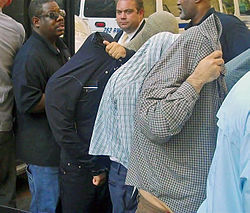
You can read the full column here.

As always, I’m happy to hear from readers via Twitter or at susan.antilla15@gmail.com.


AIG’s Greenberg Thumbs Nose at Taxpayers

The man who made the insurance company AIG into an industry giant has written a book — The AIG Story — and if there’s one thing we learn from Maurice “Hank” Greenberg, it’s that Hank admires Hank.

The book, co-written with George Washington University law professor Lawrence Cunningham, describes Greenberg as “innovative” and “independent” and “pioneering.” I reviewed it for Bloomberg Muse today:

If you’re among the U.S. taxpayers who watched in horror as $182 billion of your money made its way to the collapsing insurance giant American International Group Inc. (AIG) during the financial crisis, it might come as a surprise to learn that your forced munificence didn’t make much of a difference. In his new book, “The AIG Story,” former chief executive Maurice “Hank” Greenberg offers his take on what kept the company alive: “It was saved only by the loyalty and tenacity of its valiant workforce,” he says.

You can read my full review here. But the main thing I came away with when I put  “The AIG Story” down was what a disappointment it is when powerful people with inside access to world events miss an opportunity to pass on insights to the rest of us.

Surely, after a high-flying career befriending heads of state and moving AIG from an insurance runt to a world-wide behemoth, a man of 87 would have constructive insights about the near-collapse of the global economy. And, with a little luck, maybe even a bit of introspection about lessons he’s learned? Instead, we get 328 pages of finger-pointing and self- congratulation.

So there you have it. A wasted opportunity. But do take a look at the list of people willing to praise the book on the back cover, and consider adding them to the list of authors you needn’t follow. Amazon.com publishes the “praise” here.


A case of Wall Street greed gone too far

You hate paying taxes. I hate paying taxes. And the good folks at Goldman Sachs & Co. apparently hate paying taxes too. From my column this week for CNN.com:

“While the rest of us were donning our party clothes on New Year’s Eve, the legal worker bees at Goldman were pushing the send button on 10 regulatory filings to the Securities and Exchange Commission. By the time the ball dropped in Times Square, regulators had been notified that $65 million in Goldman stock had been granted a month early, helping a cluster of powerful multimillionaire executives trim their tax tab.”

Yes, I know. Can you blame them for taking perfectly legal means to avoid a bigger tax bill? Well, actually, yes.

“What makes the Goldman move distasteful is that it wasn’t even two months ago that CEO Blankfein was mouthing off in a Wall Street Journal op-ed that he endorsed tax increases “especially for the wealthiest” — along with a plug to cut entitlements to all you freeloaders out there.”

You can read my CNN column here.

Top stock picks of 2013 lose out to Honey Boo Boo

You’ve been reading them again, haven’t you? I’m talking about those annual “best investment ideas” that you’re seeing on every TV business show and in all your favorite newspapers, magazines, and blogs.

Stop reading them. Their advice stinks at least half the time, which means — at best — you lose half the time and win half the time. You do the math.

I wrote about the useless “Best ideas of 2013” style articles in my latest column for Bloomberg: Top Stock picks of 2013 lose out to Honey Boo Boo:

“My advice? When you see one of those how-to articles, retreat to the kitchen for what’s left of the holiday eggnog and shut off the computer. If some TV stock jock is interviewing a Wall Street star about a best pick for the year ahead, grab the remote and surf for a rerun of “Here Comes Honey Boo Boo.” At least it won’t be you who is being exploited.”

You can read the story here.

A story to share for the holidays

Here’s something I wrote for TheAtlantic.com, published today. No sleazy stock brokers, no securities regulators who don’t know how to do their jobs. Just a nice story about some important people in my family: Read story

In a Sex Scandal, You Want to be the Guy, not the Gal

In the unlikely event you missed it, our former Central Intelligence Agency chief got a tad too friendly with Paula Broadwell, the author of his biography “All In: The Education of General David Petraeus.” The ensuing media storm was, frankly, a gift to reporters who were dreading that the fiscal cliff would be the only news story around once the election was over.

But a gift they could have handled with a little more care.

In my Bloomberg View column this week, I take a look at the differences in both the language used and the questions raised in coverage of the two players in Washington’s latest sex scandal. Petraeus, for example, was referred to as “vulnerable.” Broadwell was referred to as a “slut.”

They both cheated on their spouses. They both were accomplished professionals. But there was a lot that wasn’t equal about the way they were treated in the media. “They threw this poor fellow to the wolves,” said celebrity divorce lawyer Raoul Felder on Daily Beast TV. Meanwhile, The Baltimore Sun called it just another “bimbo eruption.” A West Point grad with two master’s degrees, Broadwell is no bimbo. Let’s hope the coverage is a little better next time a sex scandal rolls around.

Best investment advice: Vet brokers yourself, because regulators aren’t doing it for you

Just because a stock broker has a license to do business doesn’t mean they’ve received a meaningful stamp of approval from regulators. Next time some financial person is pitching you for business, go back and read the stunning coverage of Mark C. Hotton, a guy who allegedly was fleecing investors for years as regulators sat back and ignored a stream of red flags.

Hotton is the fellow who fooled the Broadway producers of “Rebecca: The Musical” into thinking he’d raised millions of dollars in financing for them. The producers of Rebecca only lost $60,000 doing business with Hotton. Others haven’t been so lucky.

Hotton is in jail today, and it’s a joke when you consider that, after years of alleged stealing of millions from investors, he finally got caught because he fleeced a few big-shots from show-biz. It’s even more of a joke that U.S. prosecutors took a deep bow for their “lightning speed” sleuthing after catching Hotton 22 years after his first crime — which should have been a reason to keep him out of the brokerage business altogether.

I wrote about Hotton’s capers in a recent Bloomberg column. A week after that story, I wrote a second one, this time for TheStreet.com, about a fresh complaint against (the now-incarcerated) Hotton filed by Finra, which is the Wall-Street-funded regulator that is overseen by the Securities and Exchange Commission. There really ought to be a special judicial forum where the public can bring complaints against regulators who are utterly clueless.

Memo to former employees: Don’t mess with Goldman Sachs

Goldman Sachs’ most famous opinion writer did what no Goldman employee is supposed to do: He talked, very publicly, about his experience at the firm.

Greg Smith’s March 14 New York Times op-ed “Why I Am Leaving Goldman Sachs,” generated 3 million page views within 24 hours. The issues he brought up about how business is done at Goldman hit a chord with the public.

Now he’s written a book “Why I Left Goldman Sachs.” I reviewed it for Bloomberg today, and you can read the review here.

I have criticisms of “Why I Left.” Smith walks us through his 12 years at Goldman but doesn’t reflect on the fact that he himself was seduced by the firm and its much hyped culture of integrity and “customer first.”

And he doesn’t look at the current problems of Goldman and its competitors with a sense of history. Fraud, scandals, and conflicts of interest on Wall Street should be addressed, as Smith says, but they are nothing new. “Why I Left,” though, is mostly limited to the dozen years Smith was at the company and the “toxic” culture he observed at the end. I wonder if he understood that Goldman may not have been all it was cracked up to be in the first place.

That said, he’s getting creamed with criticisms I don’t think he deserves. The book was all hype and didn’t disclose anything illegal, goes one argument. Well, the author said “I don’t know of any illegal behavior” in that op-ed seven months ago, so why did his critics expect otherwise? My favorite Greg Smith bash is the argument that goes something like this: “He asked Goldman for a million-dollar bonus that he didn’t deserve.” Are we really supposed to be shocked at the notion of someone on Wall Street wanting to get paid more than they deserve?

Considering Smith’s out of work, maybe Goldman will consider him for its next FT/Goldman Sachs Business Book of the Year Award, which gives five-figure payments to authors who sometimes even write about brokerage firms. Talk about a conflict of interest.

Goldman’s counterattack has been over-the-top. The firm shared excerpts from Smith’s self-evaluations with Bloomberg, as well as documents that showed he was denied a raise and a promotion.

Did you know that your bosses could hand out information from your HR files if you tick them off? I’ll bet that looming threat is adding a whole new understanding of the firm’s culture of “collaboration, teamwork and integrity” with the troops at Goldman.

The book could have been better. The issues Smith raised are important even if they are age-old Wall Street problems. And the message from Smith’s former employer is loud and clear: Don’t mess with Goldman Sachs.