
I spoke with Investment News about my 25-year journey covering gender discrimination on Wall Street. You can listen to the podcast here.
I spoke with Investment News about my 25-year journey covering gender discrimination on Wall Street. You can listen to the podcast here.
In today’s forced arbitration world, plaintiffs’ lawyers can’t make any money on a $500 rip-off complaint from a single consumer or a one-off $1,000 wage and hour claim. Banning access to the courts for individual matters — while barring group claims even in arbitration — is a near-guarantee that sleazy operators won’t be held accountable.
Until now. Lawyers whose cases hit a dead-end when companies began banning class actions are using advertising, social media, and word-of-mouth among employees to track down plaintiffs and file mass arbitrations. That means that, these days, exploited employees with very similar cases can turn the arbitration game against employers. I wrote about one such case against the food delivery service DoorDash for The American Prospect. You can read it here.
A number of companies that sell liability insurance to cover sexual harassment are demanding higher deductibles or restricting coverage for businesses in high-risk industries such as entertainment, a new survey shows. I wrote about it today for CNBC.com.
A year ago, insurers were getting concerned about the risks they were taking on when they wrote these policies, but their anxiety has risen over the past year. This is the story I wrote about the 2018 survey for theintercept.com.
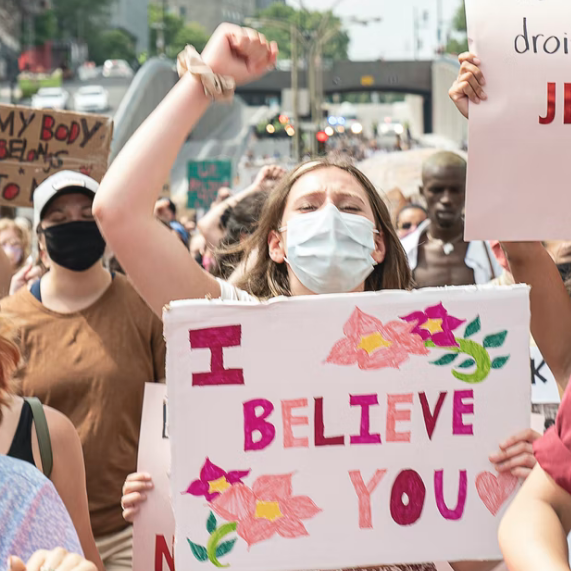
I worked with the amazing journalists at Type Investigations, The Intercept and Retro Report to tell the story of the women who fought back after being harassed on Wall Street in the 1990s. Watch the segment from tonight’s PBS Retro Report here.
Women filed a wave of lawsuits and arbitrations against financial firms in the 1990s and early 2000s, disgusted by a culture of rampant sexual harassment and gender discrimination. The biggest cases of that era collectively drew thousands of participants in class actions and led to large settlements including $150 million against Smith Barney and $250 million against Merrill Lynch.
At a time when the long-term consequences of #MeToo on women’s careers is an open questions, I looked at court records, tracked down plaintiffs and spoke with a dozen employment lawyers to see how things had turned out for the women — and how things had turned out for the men who allegedly harassed them. My findings were sobering. You can read my story today for The Intercept here.
Patrick Byrne, CEO of the online retailer Overstock, resigned today. The story behind it is too bizarre and convoluted to rehash, but this New York Times’ version will give you a good overview of recent events. Over the years,Byrne and his social media sidekick Judd Bagley staged vicious attacks on the reporters who didn’t buy their conspiracy theories. They were effective enough that a star of financial journalism once told me it wasn’t worth writing about Byrne because of all the grief he put reporters through.
The amazing thing is that a guy like Byrne would last so long running a public company while ranting about “Sith Lords,” nefarious short sellers and shifty operators in the Deep State. Check out this story that I wrote about the company 12 years ago. (And yes, this set me up as a Byrne/Bagley target). Continue reading
A woman who is sexually harassed at work is six and a half times more likely to change jobs than a woman who is not. So you might think that, a year and a half into the #MeToo movement, sexual harassment would be a front-burner issue for the people paid to diversity Wall Street.
Yet at a two-day conference of diversity experts in the securities industry in New York in late May, not one of the seven panels addressed the challenge of sexual harassment in the workplace. I wrote about it in my latest piece for The Intercept. You can read it here.